
Recently, I was contacted by a family in Greenville, North Carolina, who was looking for a decorative wall finish that would better complement their beautiful timber-frame home. After discussing the project and working through the logistics, I packed up my truck with tools, pigments, plaster materials, and supplies and headed south to begin what would become a very rewarding project.
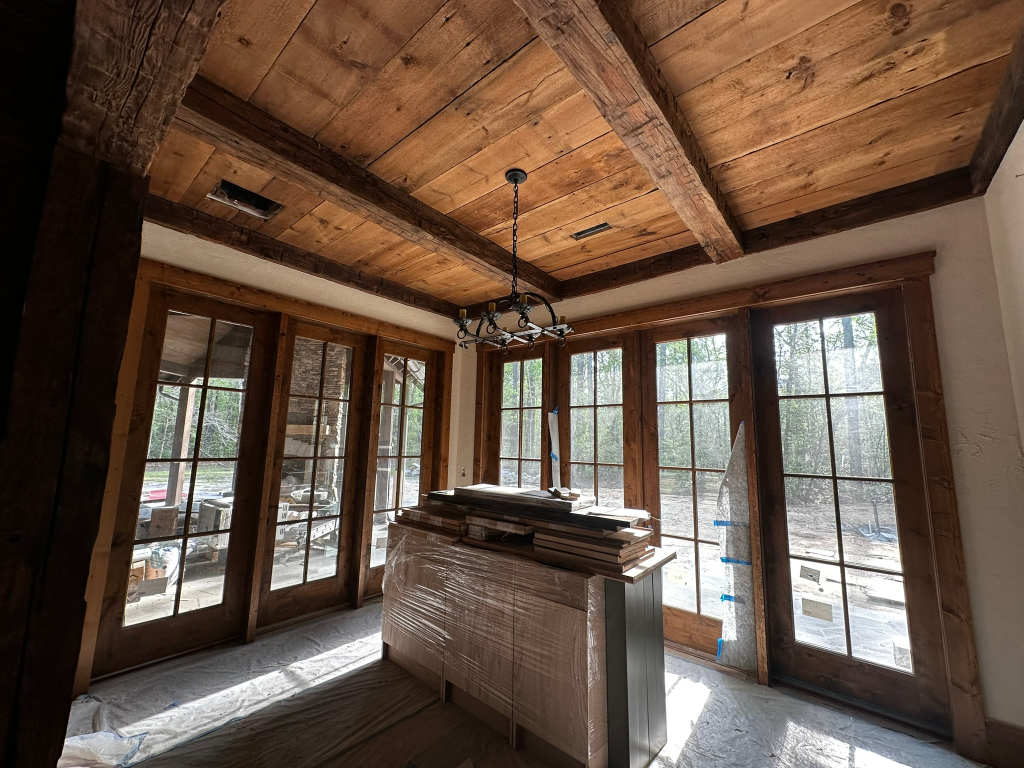
The home itself is absolutely stunning. Nestled back in the woods, it was designed and built as the owners’ forever home. They have spent several years bringing their vision to life, and it shows in every detail. From the craftsmanship to the materials selected throughout the house, there is a real sense of thought and care behind the project.
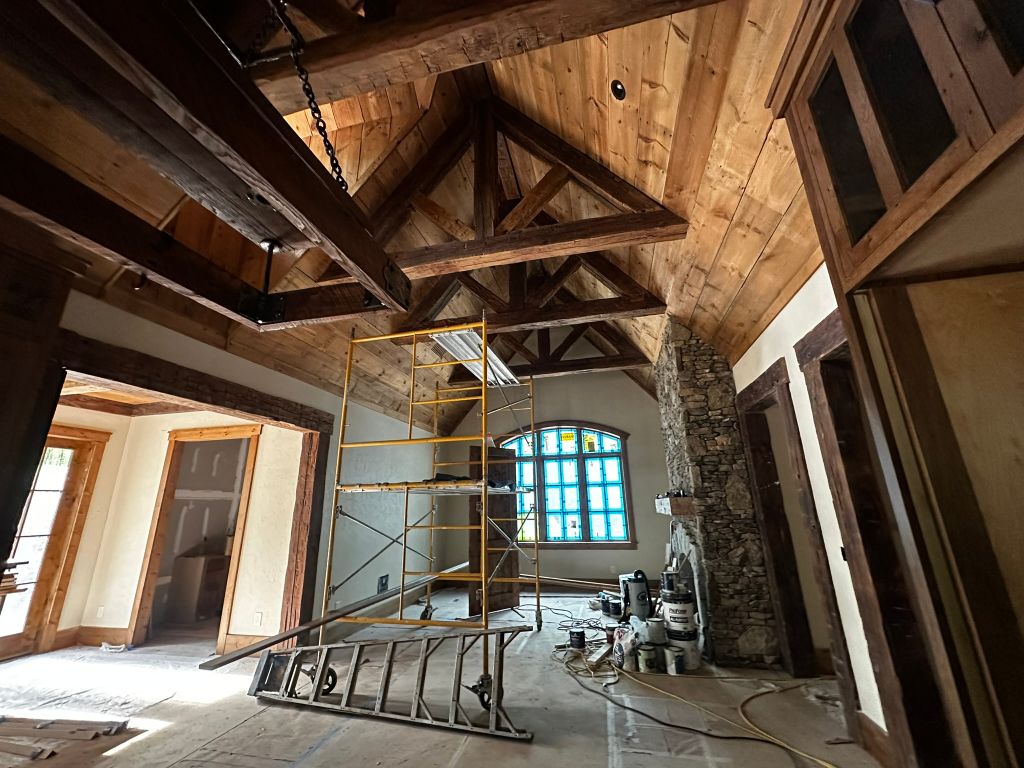
My portion of the work involved applying a decorative rustic plaster finish over approximately 3,300 square feet of drywall. The home features large exposed timbers, natural wood elements, and a warm rustic character throughout. While the drywall was perfectly finished, it felt a little too smooth and uniform compared to the surrounding materials. The goal was to create a finish that would bridge the gap between the refined drywall surfaces and the natural beauty of the timber construction.
After reviewing several options with the homeowners, we settled on a low-relief rustic plaster finish that added subtle movement, texture, and character to the walls while remaining elegant and timeless. The finish was applied in two coats across the entire project.
Once the plaster work was complete, the next challenge was protecting the finish without altering its appearance. Many protective topcoats can darken, enrich, or otherwise change the color of decorative plaster. To preserve the exact look we had created, we selected a specialty dead-flat protective coating sourced from Europe. Two coats were carefully applied to seal and protect the surface while maintaining the natural appearance and color of the plaster.
One of my favorite parts of the project was a bedroom ceiling that had been finished in drywall. Rather than leaving it as a standard flat surface, we transformed it into a finish that resembles the texture and character of an albino elephant hide. The subtle pattern added warmth, depth, and visual interest, turning an ordinary ceiling into a unique architectural feature.

In total, the project took approximately three weeks to complete. Large decorative plaster projects like this require patience, consistency, and attention to detail, but the finished result was well worth the effort. The rustic plaster now feels like a natural extension of the home’s architecture, complementing the exposed timbers and helping create the warm, inviting atmosphere the homeowners envisioned.
