Description
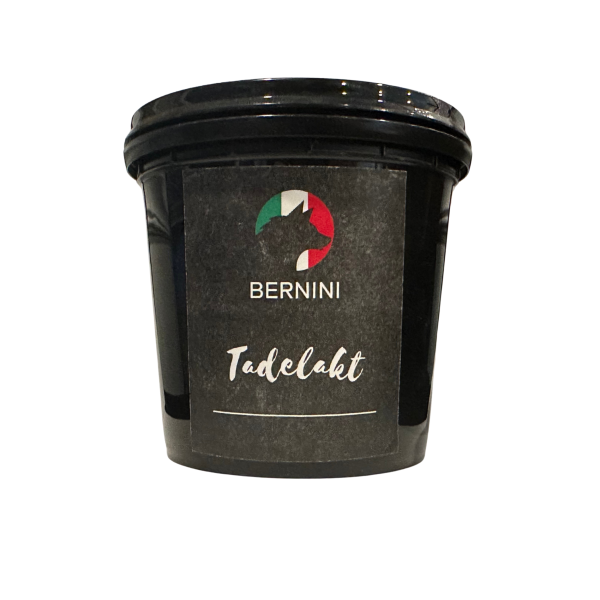
Tadelakt plaster is a traditional Moroccan lime-based dry mix. It is not manufactured—it is created. Made slowly. Made deliberately. Made by hand.
The Bernini® Authentic Moroccan Tadelakt Dry Mix, curated by Ronald Layman, honors one of the world’s oldest continuous plaster traditions. Rooted in Moroccan architecture and refined through generations of master artisans, this Tadelakt plaster is offered in its purest form: a dry powder, waiting for water, pigment, and skilled hands to bring it to life.
This is not a pre-tinted or pre-mixed product. It is a true craft material—meant to be finished by the artisan.
What It Is
Bernini® Tadelakt plaster is a traditional lime-based dry mix. It arrives as a fine mineral powder that must be combined with clean water and compatible mineral colorants to achieve the desired tone and working consistency.
This approach preserves the integrity of the material and allows complete control over color, texture, and finish—exactly as Tadelakt plaster has always been practiced.
Tadelakt Plaster vs Venetian Plaster
Tadelakt plaster is built for wet rooms. Venetian plaster is built for polished decorative walls. Tadelakt plaster uses hydraulic lime finished with olive oil soap so the surface becomes water-resistant and breathable. Use Tadelakt plaster on showers, steam rooms, and tub surrounds when you want a seamless surface with no grout. Venetian plaster remains the better choice for dry feature walls that need a high marble-like burnish.
Why Lime Requires Respect
Lime plaster behaves differently than modern coatings. It does not “stick” the way acrylic or cement products do—it bonds chemically and mechanically to mineral surfaces.
Masonry & Mineral Substrates
When applying Bernini® Tadelakt plaster over masonry surfaces such as:
- Brick
- Stone
- Lime render
- Cementitious plaster
Pre-wetting the surface is essential.
Thoroughly dampen (do not saturate) the substrate before application. This is critical because:
- Lime cures through carbonation, not drying
- A dry masonry surface will aggressively absorb moisture from the plaster
- Rapid moisture loss weakens adhesion and disrupts proper curing
A properly dampened surface allows the Tadelakt plaster to open up and bond naturally, carbonate evenly, and reach maximum strength and durability. This is how lime has been applied for centuries—and it still works because the science has never changed.
Non-Masonry Surfaces
For all non-mineral substrates—including drywall, painted surfaces, and previously sealed or dense substrates—use Bernini® Quartz Primer.
Quartz Primer creates:
- A mineral-rich bonding surface
- Mechanical “tooth” for lime adhesion
- Consistent suction across the wall
Without it, proper bonding cannot be guaranteed. This step is not optional—it is foundational.
How Tadelakt Plaster Is Finished
Once applied, Bernini® Tadelakt plaster is compressed and polished with smooth river stones, densified through pressure (not sanding), and sealed with traditional olive oil soap worked into the surface by hand.
The olive oil soap reacts with the lime and forms a naturally water-resistant, breathable finish—ideal for wet areas when applied correctly. That reaction is the point of Tadelakt plaster. This is not a topical sealer. It is a chemical transformation.
Where It Belongs
Bernini® Tadelakt plaster is suitable for:
- Interior walls and ceilings
- Bathrooms and powder rooms
- Showers and wet areas (proper technique required)
- Fireplace surrounds
- Feature walls and architectural elements
- High-end residential and hospitality interiors
Each surface is seamless, tactile, and alive with subtle movement.
Who This Product Is For
This Tadelakt plaster is intended for trained applicators, serious artisans, and designers and builders who respect traditional materials.
Tadelakt plaster rewards patience, discipline, and understanding. It does not forgive shortcuts.
The Bernini® Standard
Every Bernini® product reflects the philosophy of Ronald Layman: authentic materials, traditional processes, no modern shortcuts, and results meant to last generations.